
Articles
August 5, 2026
1 min read

Olsom Team
Articles
14 August 2026
4 min read
Connecting every step of plastics production with smart manufacturing
Follow the smart manufacturing roadmap of a plastics manufacturer and see how AGW by OLSOM connects planning with shop-floor execution.
In this article:
Intro
How does a traditional plastics factory become a smart factory?
Digital transformation is a familiar topic in manufacturing, but what it actually looks like on a real shop floor is harder to picture.
At OLSOM, we've worked with plastics manufacturers for more than a decade, helping them improve visibility, traceability, quality, and production performance. One thing we've learned is that becoming a smart factory isn't a single project or a one-time implementation. It's a gradual process that builds capability over time.
Let's follow the smart manufacturing roadmap of a typical plastics manufacturer producing injection-molded components.
Using AGW, OLSOM's smart manufacturing platform, we'll see how each step improves shop-floor visibility, traceability, and production execution.
We'll start with a single production order as it moves through the factory.
Granulate arrives at the plant, then moves through molding, assembly, quality control, and packaging before being shipped to the customer. At every step, production teams need answers to three fundamental questions:
- What's happening on the shop floor right now?
- Can we trace every material, process, and finished product?
- Are production orders ready to run?
Those three questions might seem like something the factory's existing systems should already answer. In reality, most systems only provide part of the picture.
To understand why, it's worth looking at where ERP ends and shop-floor execution begins.
MES vs ERP. The shop floor reality
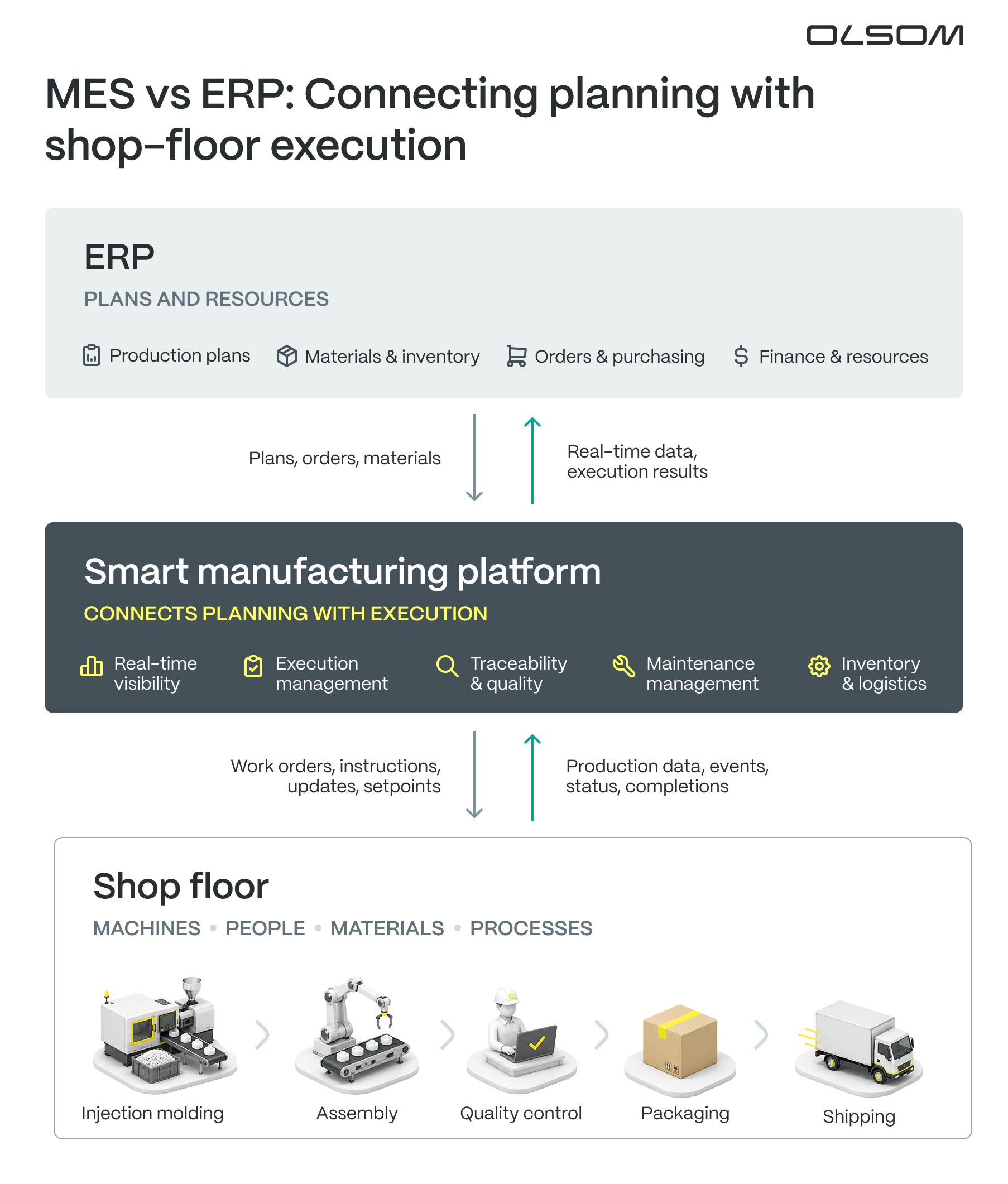
Planning production and managing shop-floor execution are two different challenges.
An ERP system can tell the factory what needs to be produced, when it needs to be produced, what materials should be available, and which orders need to be fulfilled.
What it can't tell you is what's actually happening on the shop floor right now. Is the injection molding machine running as planned? Why did it stop? How many good parts have been produced? Is the process running within specification?
This isn't a gap ERP was designed to close. A Manufacturing Execution System (MES), or smart manufacturing platform, fills that gap by connecting production plans with real-time shop-floor execution.
It collects data directly from equipment, operators, and production processes, giving manufacturers real-time shop-floor visibility to support better operational decisions.
According to McKinsey, manufacturers implementing digital manufacturing technologies can improve overall equipment effectiveness (OEE) by 10–15 percentage points.
Build real-time shop-floor visibility
The first operational challenge for our plastics manufacturer is answering one simple question: What's happening on the shop floor right now?
Without real-time data, production teams often have to wait until the end of a shift to understand what actually happened. An order may fall behind schedule, scrap levels may begin to rise, or an injection molding machine may continue consuming energy even though production has stopped—all without anyone noticing until much later.
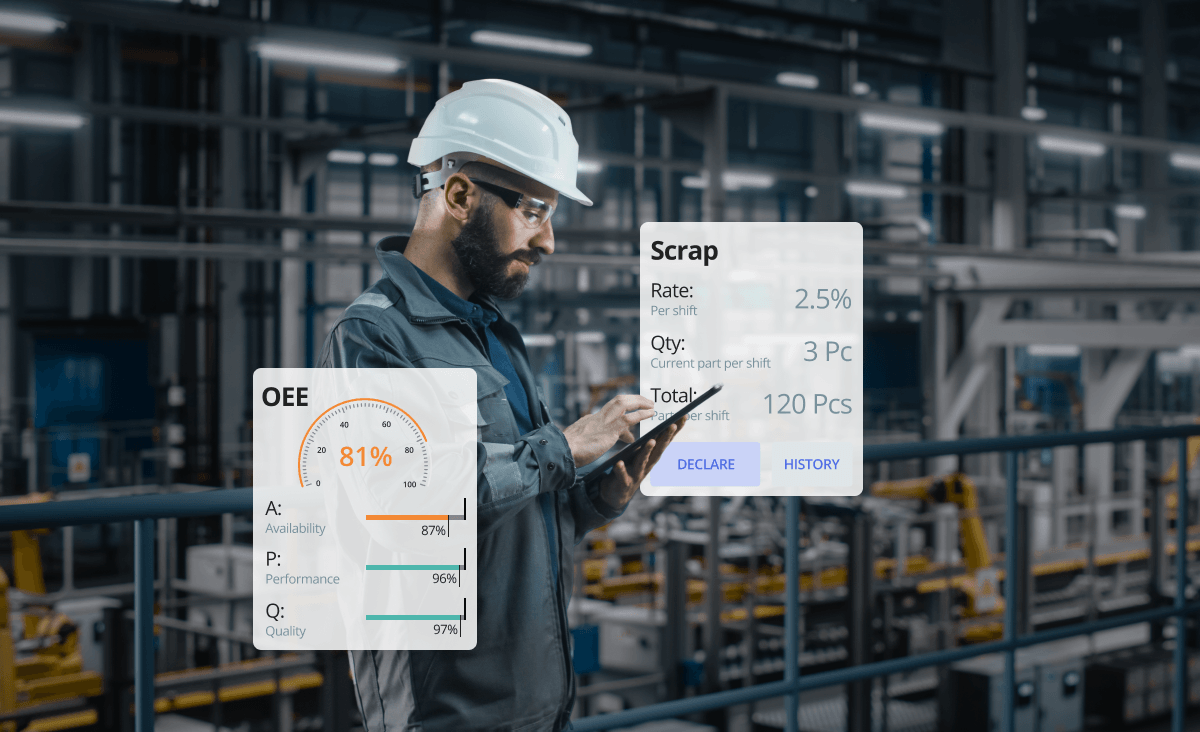
By connecting equipment, production lines, and operators, a smart manufacturing platform like AGW makes these events visible as they happen. Through a single, real-time view of equipment status, progress against plan, scrap, downtime, and alerts, AGW helps teams identify issues before they become operational problems.
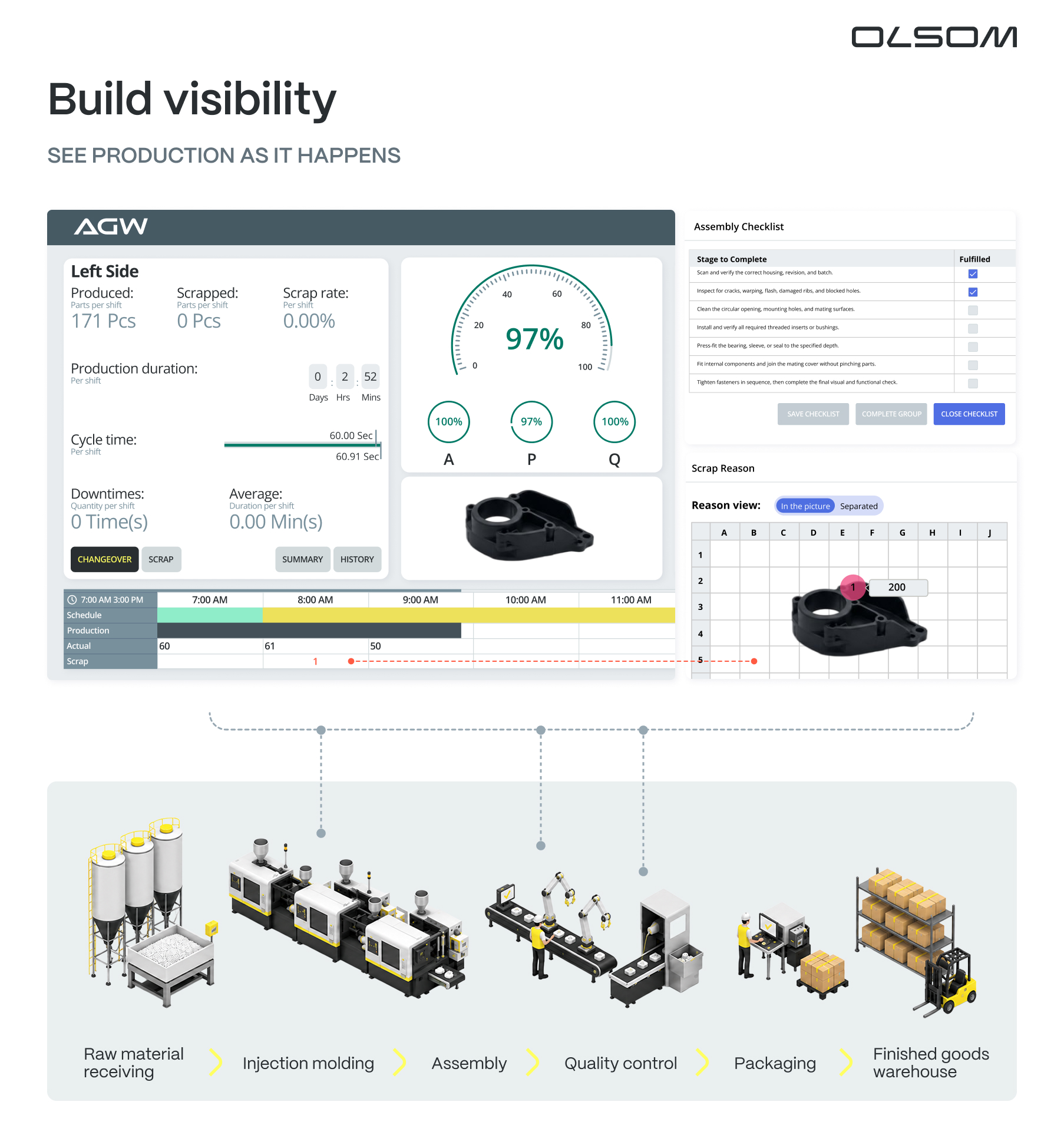
Instead of relying only on end-of-shift reports, supervisors can identify issues as they emerge and take action immediately. Whether it's an unexpected machine stop, rising scrap, or equipment continuing to consume energy outside scheduled production, problems become visible early enough to reduce their operational impact.
This shared operational view helps production teams make faster decisions, reduce the impact of production losses, and continuously improve overall equipment effectiveness.
Real-time shop-floor visibility helps manufacturers respond faster. But when a quality issue occurs, they also need to understand exactly where it came from.
Enable traceability and quality control
Back at our plastics manufacturing plant, a quality issue is identified during the final inspection of an injection-molded part. Finding the defect is only the first step. The bigger challenge is understanding where it came from, which parts are affected, and whether production can continue.
Without traceability, teams often have to search through production records, machine data, and quality reports to piece together what happened. That takes time and can result in larger containment actions, unnecessary scrap, or even a full batch being held back.
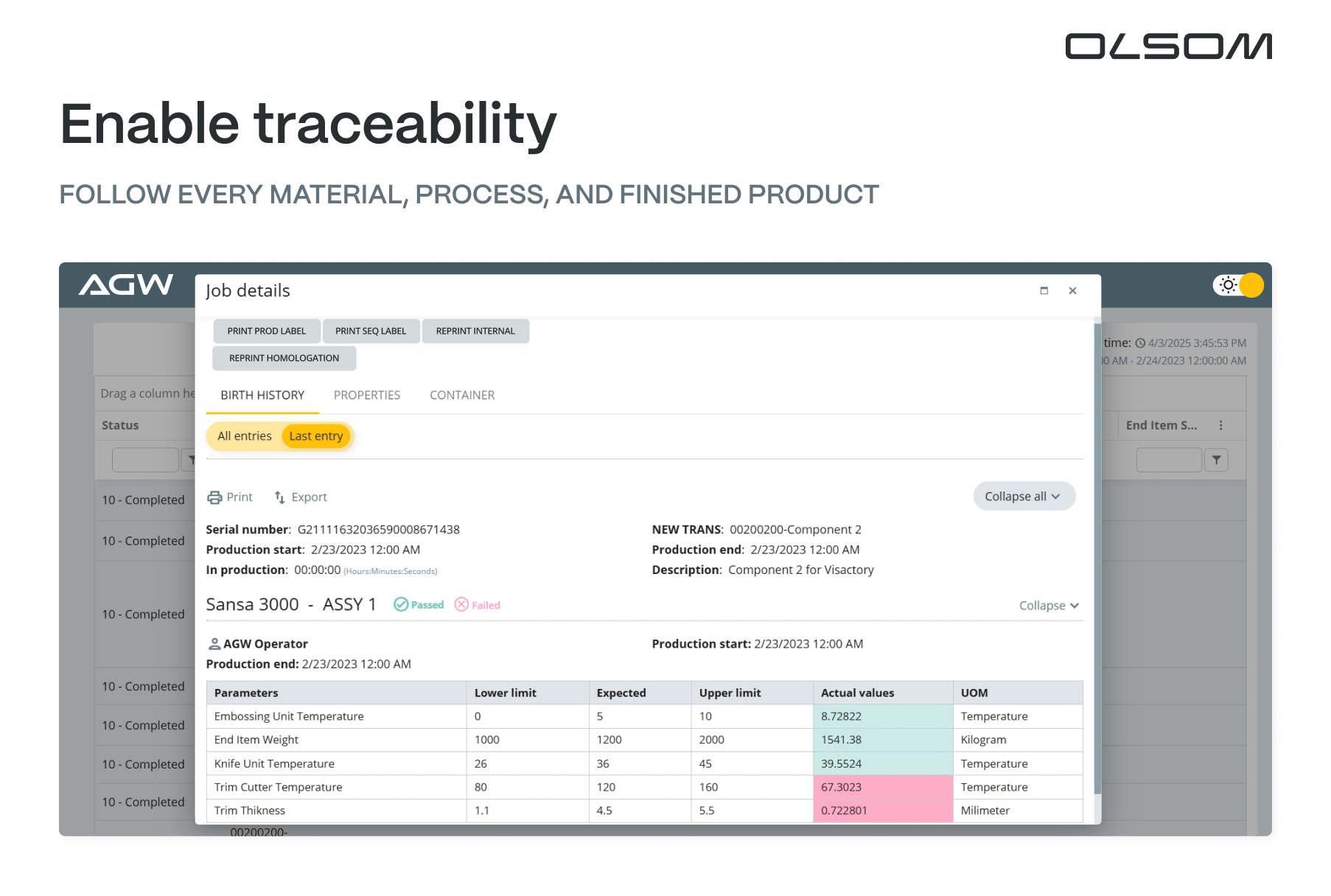
Smart manufacturing platforms connect quality data with the materials, equipment, and process history behind every manufactured part, creating a complete digital history for each batch or finished product. With AGW, our plastics manufacturer can instantly trace products back to the raw material lot, machine, mold, operator, process parameters, and inspection results used during production.
Instead of searching through multiple systems or paper records, quality teams can identify the source of a defect within minutes, determine exactly which products are affected, and make faster, more informed decisions. This reduces unnecessary scrap, minimizes production disruptions, and helps contain quality events before they affect a larger portion of production.
Connect production planning and execution
Our plastics manufacturer now has real-time visibility into production, and every batch can be traced throughout the manufacturing process. But another challenge remains.
The schedule says the next order should start at 08:00. The mold is still being changed. The required material hasn't arrived at the workstation yet. Another urgent order has just been released, and the operator is waiting for confirmation on what to run next.
Production can only begin when the required materials, tooling, equipment, and people are ready. Coordinating all of those moving parts is where planning becomes execution.
Without a connected execution layer, planners, supervisors, warehouse teams, and operators often work from different information. Even small coordination gaps can delay production and disrupt schedules across the shop floor.
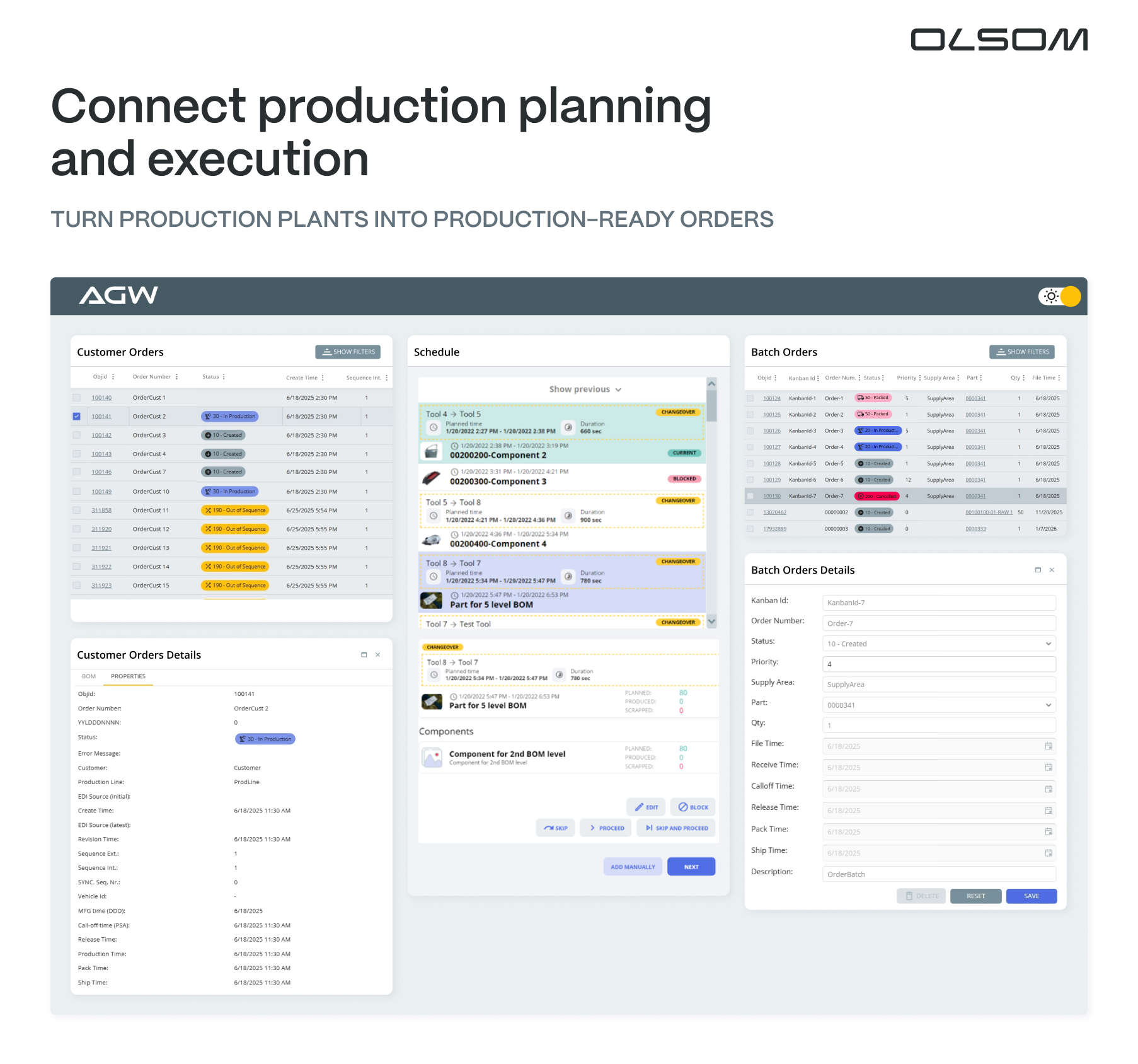
Smart manufacturing platforms like AGW help manufacturers turn production plans into production-ready orders. Before an order is released, teams can verify that materials have arrived, the correct mold is installed, equipment is available, and everything needed to begin work is in place.
As priorities change throughout the shift, production sequences can be adjusted and new orders released using the latest operational information rather than assumptions or disconnected spreadsheets.
Together, real-time visibility, end-to-end traceability, and connected execution create the operational foundation for a smart factory. With every team working from the same information, manufacturers can respond faster, coordinate work more effectively, and keep production moving as conditions change.
Conclusion
The plastics manufacturer we followed throughout this article didn't become a smart factory through a single project or software implementation. It became smarter by solving one operational challenge at a time—first gaining visibility, then enabling traceability, and finally connecting planning with execution.
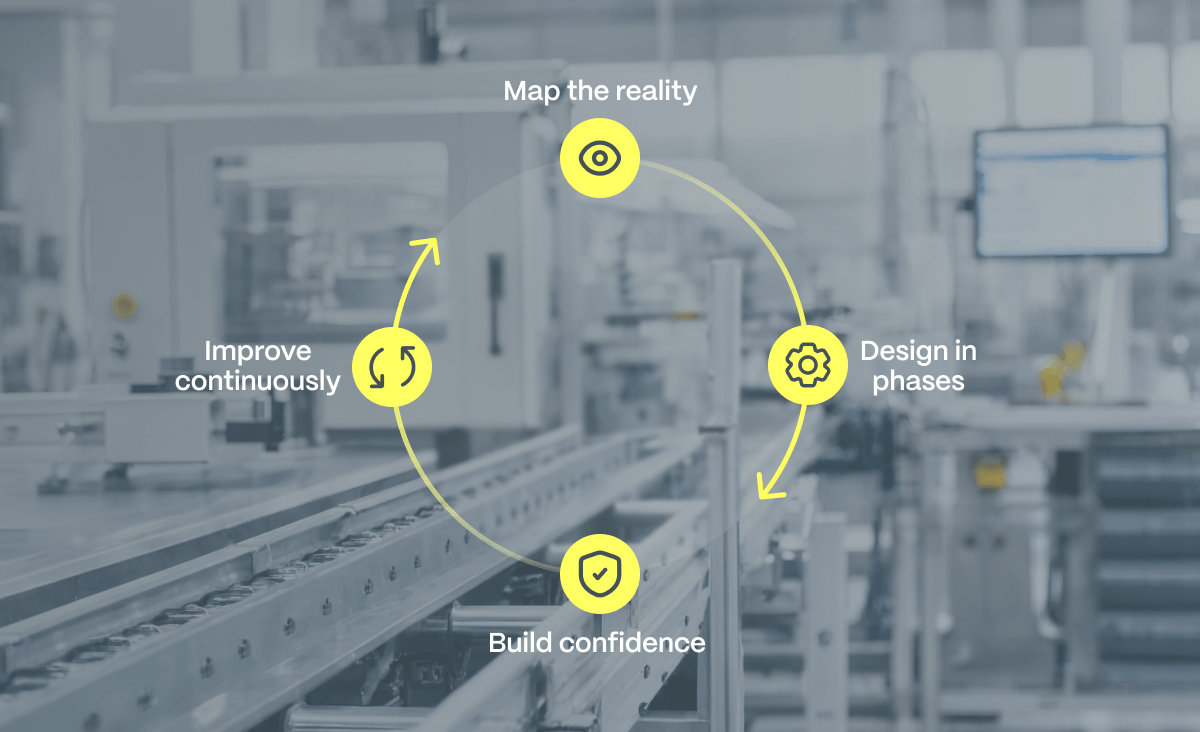
That's what a smart manufacturing roadmap looks like in practice: solving one operational challenge at a time and building each improvement on the last.
Whether you're looking to improve visibility, strengthen production traceability, or better connect planning with execution, OLSOM helps manufacturers turn those goals into practical solutions. Trusted by manufacturers across 57+ plants in 12 countries, our smart manufacturing platform connects planning, production, and performance in one place.
Talk to our team to discover how AGW can help you build a more connected, data-driven manufacturing operation.
Stop planning MES from scratch. Start with a proven framework.
Get MES implementation playbook - a 4-stage framework that takes you from MES value definition to measurable ROI in months, not years.
Thank you!
The playbook is on its way, check your inbox.
Oops! Something went wrong while submitting the form.

.png)
Smart solutions that adapt to your unique operations

2026 @All Rights Reserved
Made by SNIG