
Articles
June 24, 2026
1 min read

Yuri Pylypenko
CEO at OLSOM
Articles
02 September 2026
4 min read
From features to ROI. A value-driven MES approach
MES projects rarely stall on technology. They stall on chasing features over solving the real problem. Here's how value-driven thinking delivers ROI.
In this article:
This article continues OLSOM's ”Road to Smart Manufacturing” series, a practical look at what determines MES implementation success and where measurable MES ROI really comes from.
New to the series? Start with part 1: Why MES implementation projects fail—and how to avoid it—for the expectations and culture foundation that makes value-driven thinking possible.
Manufacturers often begin their MES journey with a familiar question: which features do we need? But as Yuri Pylypenko, CEO of OLSOM, has seen across dozens of factories, this is often where projects lose direction before they even begin.
"Features vary from system to system. Even the same feature can mean completely different things," Yuri notes. "The real question is, what problem are we trying to solve?"
In this article he breaks down why feature-driven decisions fall short, how value-driven roadmaps change outcomes, and how OLSOM helps manufacturers prove returns from day one.
Why Feature-Driven MES Projects Miss the Mark
Manufacturers often begin evaluating MES platforms by scanning long lists of features. It feels logical, but in practice it rarely leads to clarity. Two vendors can use identical terminology while offering completely different levels of functionality.
MES features are rarely apples-to-apples. A few examples:
- Digital work instructions could mean static PDFs, or visually guided, step-by-step, validated workflows.
- Traceability could mean batch-level tracking, or genealogy of individual items.
- Quality control might be manual data entry, or a robust AI-driven predictive quality system.
Because implementations differ so much, running an MES evaluation by comparing feature lists creates unrealistic expectations and, ultimately, misalignment.
"Rolling out software because of hype doesn't work," Yuri emphasizes. "It must solve a real problem and deliver value we can measure."
The ROI-Driven Approach: Start With the Problem
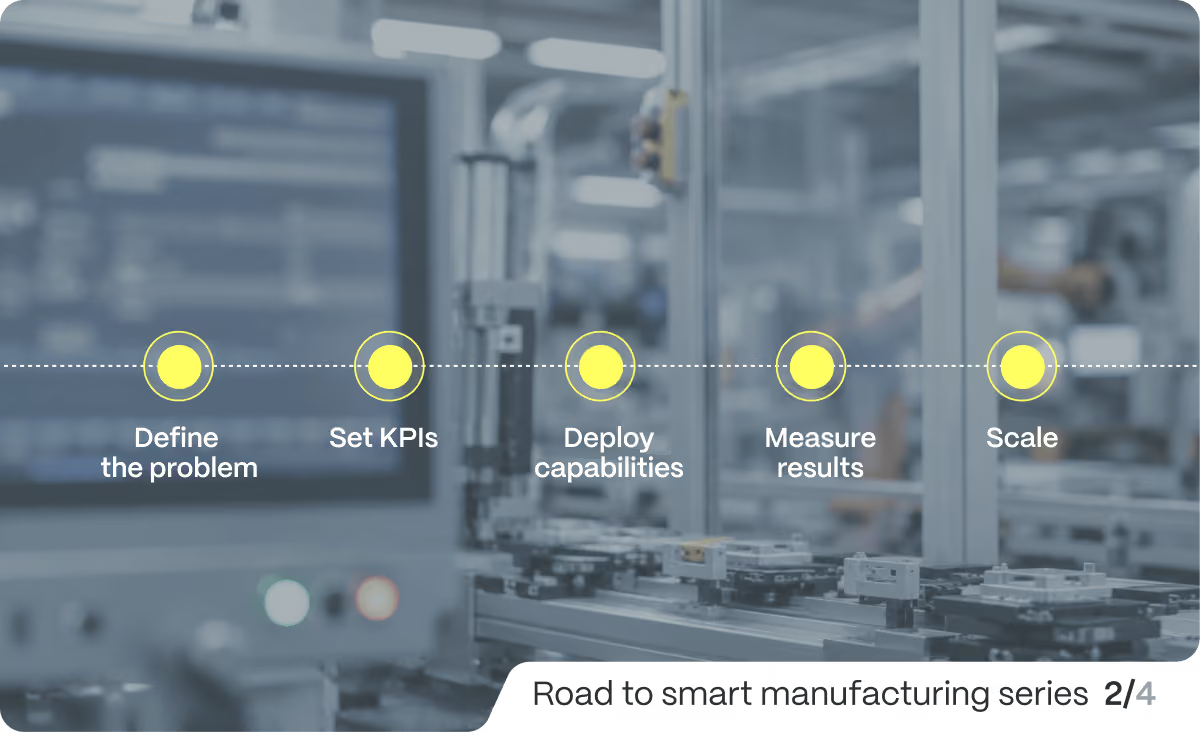
Instead of starting with feature catalogs, OLSOM starts with three questions:
- What is the specific problem we're solving?
- Which capabilities directly eliminate that pain?
- How will we measure success, and isolate the impact?
Without well-defined KPIs tied to the original problem, teams cannot isolate the system's impact. Multiple initiatives blend together, making MES ROI from the software implementation impossible to demonstrate.
Tools like the Value Proposition Canvas help structure pains, gains, and priorities. We use it less as a formal exercise and more as a simple way to make sure everyone sees the same picture.
"With the right metrics in place, we can measure how each feature, or combination of features, changes operations over time," Yuri explains.
This is where phased rollouts outperform Big Bang implementations. MES value becomes visible in months, wrong assumptions surface early, and corrective actions get applied quickly.
How OLSOM Conducts an MES Audit
OLSOM offers both on-site and remote audits. The philosophy behind each MES audit is the same: deeply understand how the factory really works.
On-Site Audit: Seeing the Reality Behind the Process
"When we go on-site, we see things no questionnaire can reveal," Yuri says.
One example: a bottled water manufacturer claimed they had no downtime issues, ever. After observing the line for one hour, OLSOM identified:
- 5 micro-stoppages
- Roughly 15 minutes of unaccounted downtime
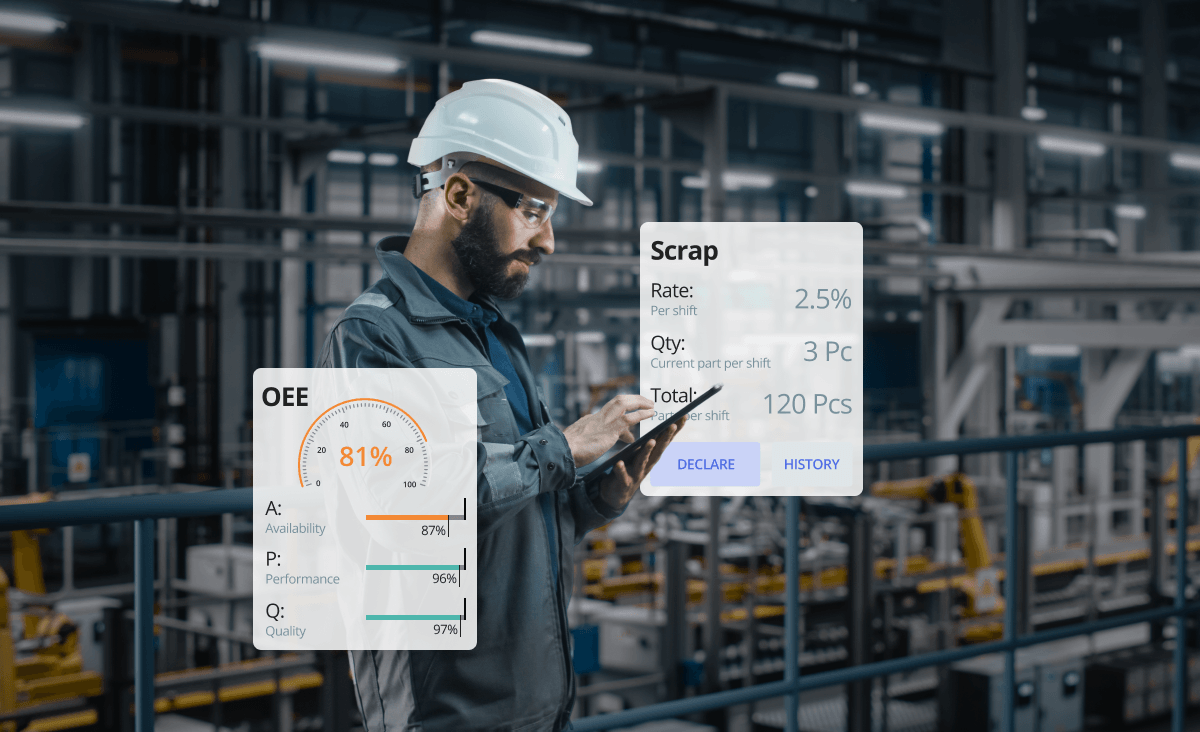
- About 25% loss of equipment availability
The plant didn't see it as a problem, because the time was never measured. MES made the invisible explicit.
Remote Audit: Structured, data-driven, and efficient
When on-site presence isn't possible, OLSOM uses a tailored audit checklist, guided video walkthroughs of the plant, and interviews to understand culture, workflows, and readiness for digital adoption.
Both methods produce a clear map of pains, opportunities, and the areas where value should be created first.
Why "Nice-to-Have" Means Something Different in Every Factory
Two factories inside the same enterprise can have completely different MES needs.
Yuri shares an example from two plants in Mexico, identical products, same corporate structure, same country, yet:
- Factory A had ultra-tight takt times, so scheduling optimization was their number one priority.
- Factory B had frequent defects, so real-time defect detection and preventive actions mattered far more than scheduling.
"There is no universal list of nice-to-have features," Yuri says. "Value depends entirely on context."
This is why OLSOM never applies a rigid MES template. Even in multi-site projects, about 30% of the MES implementation requires adaptation to each plant's workflows and culture.
The Cultural Factor: Technology Alone Can't Deliver ROI
Even the best software fails when culture isn't ready. Yuri shares several examples from the field.
When an MES loses trust
A plant had an MES that once miscalculated metrics because of software defects. Even after the fixes, operators refused to rely on it. "The system was technically fine, but culturally compromised," Yuri explains. "Once trust is gone, adoption disappears."
When KPI culture doesn’t exist yet
One manufacturing excellence leader chose to start with whiteboards rather than software, to help the team grow comfortable with performance measurement before moving to digital KPIs. Yuri sees this as a smart move: build cultural readiness first, then step into real-time KPI visibility the team has never been exposed to.
When MES feels threatening to operators
New logins, digital validation, workstation screens everywhere. Change can feel overwhelming. "It completely changes how they work," Yuri says. "The transition must be handled carefully, and the system should help people, not complicate their day."
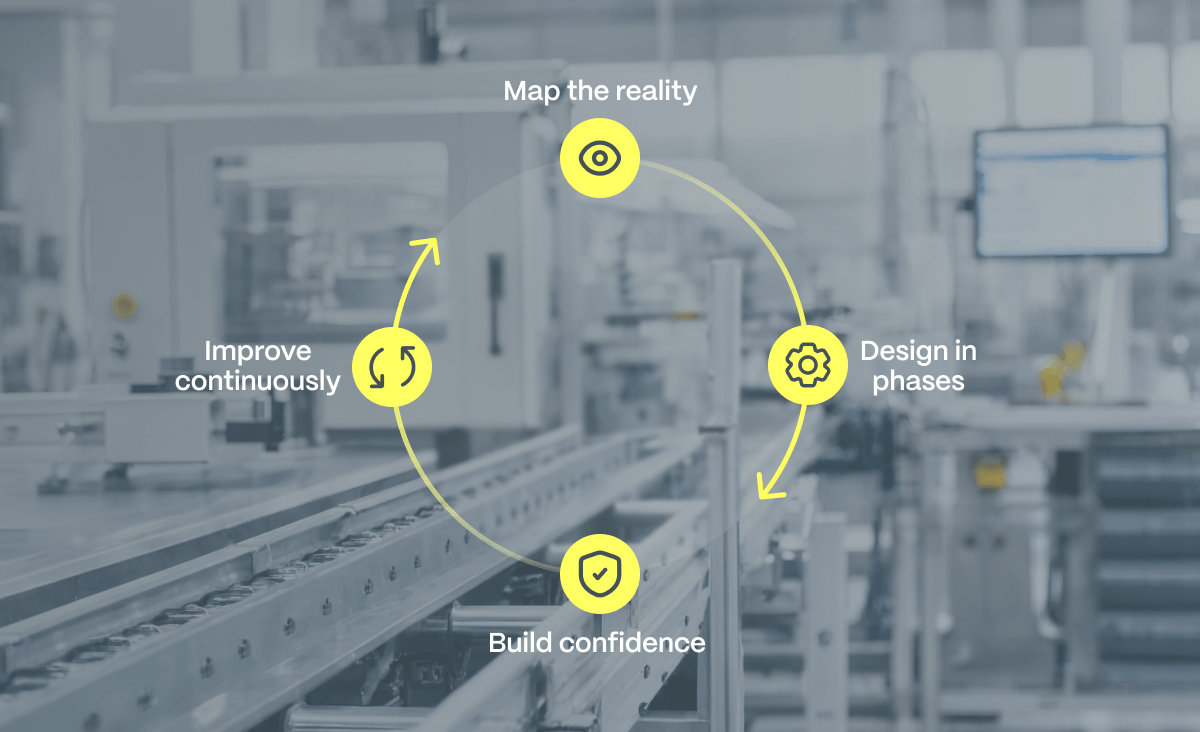
This is where OLSOM's approach shows its value. Phased rollouts, clean UX, and step-by-step MES adoption reduce resistance and build confidence.
Aligning Capabilities With Customer Goals: OLSOM's Approach
OLSOM's philosophy rests on flexibility and long-term scalability, supported by AGW, our smart manufacturing platform built on a no-code architecture.
Flexibility Without Fragmentation
Some MES vendors excel in narrow areas but struggle outside them. Others offer customizable codebases that turn every plant into a unique software fork. OLSOM strikes the balance: highly configurable without changes to application code, a standard platform where continuous updates survive custom setups, and adaptation at the pace of the business.
This foundation ensures that even highly customized configurations remain part of the same product and stay compatible with future upgrades. AGW’s configuration-first design allows factories to adjust workflows, screens, logic, and data capture through settings, not code. This results in:
- Customization without creating one-off versions
- Consistency across multi-site deployments
- Continuous updates that do not break local configurations
- Faster scaling to new products, lines, or facilities
AGW adapts to operational reality — not the other way around.
Modularity: Solve Pains in the Right Order
A successful MES roadmap doesn't start by deploying everything. It starts with the most immediate, high-impact problems and expands only as teams are ready. A composable MES design makes that possible. With AGW, manufacturers typically begin with the capabilities that deliver fast, visible improvements:
- Operator guidance to cut errors and stabilize workflows
- Traceability to eliminate blind spots and support audits
- SPC and quality insights to catch deviations early
- Maintenance management to reduce stoppages
- Scheduling and sequencing to stabilize takt-driven operations
All modules run on the same core platform, so improvements build on one another instead of requiring rework or parallel systems.
"Modularity enables fast ROI," Yuri explains. "You don't wait years. You see impact within months, if not days."
ROI Comes From Clarity, Not Features
MES implementation projects succeed when everyone involved understands why the system is being introduced and what success should look like. When factories align around the real problems, track the right metrics, and move in manageable steps, value becomes visible early and keeps growing with each phase.
MES success isn't about deploying everything at once. It's about solving real problems, building trust, and moving step by step.
— Yuri Pylypenko, CEO of OLSOM
Feature lists don't create transformation. Clear priorities and a system that adapts to the factory do. That's the path to long-term MES ROI, and to genuinely smarter operations.
Read next in the series: From Roadmap to Go-Live: The Anatomy of a Successful MES Implementation
MES ROI isn't guesswork, here's the pattern that predicts it.
Get the MES playbook—a 4-stage framework from planning to execution to make sure your next MES move actually pays off. Instant access.
Oops! Something went wrong while submitting the form.

.png)
Smart solutions that adapt to your unique operations

2026 @All Rights Reserved
Made by SNIG